If you are running a coaching business at any real scale, you already know the problem. You are good at coaching. The work you actually trained for, the sessions that change how clients think: that part is fine. What is eating your week is everything around it.
Leads come in and you are too slow to respond. Discovery calls slip through because follow-up emails pile up in a draft folder. You onboard a new client and spend two hours manually sending intake forms, portal links, and welcome emails you have written seventy times. Then between sessions, clients lose momentum and you are the one manually chasing check-ins.
AI automation for coaches is the answer to that specific problem. Not AI in the abstract sense of "AI will revolutionise everything," but a set of concrete, buildable systems that handle the repeatable logic of your business so you stop paying for it with your own time.
This is a guide written from the engineering side of those systems. Not a tool review roundup. Not a list of apps to try. A first-principles explanation of what these systems actually do, how they fit together, and how to start building them without wasting six months on the wrong things.
What AI automation actually means for a coaching business
The phrase "AI automation" has been polluted by demo culture. You have probably seen the automations that look impressive in a three-minute video: an agent that browses the internet, answers questions in a chat window, generates a report. Most of those are demos that do not survive contact with a real business.
Automation that actually works in a coaching business is less dramatic and far more valuable. It is systems that:
- Monitor a lead source and respond within five minutes, every time, without you being awake
- Qualify an enquiry and guide the person toward booking a call, using your words, on your behalf
- Send the right contracts, intake forms, and welcome materials the moment a client pays, without you touching anything
- Send a check-in to a client three days before their next session, collect their progress update, and surface it for you before the call
None of these require you to build a robot. They require you to map out the logic you already follow manually, and then hand that logic to a system that runs it reliably, at scale, without forgetting.
This is what separates AI automation from "using AI tools." Tools require you. Systems run without you.
The five automation systems every coaching business needs
Most coaching businesses doing manual admin are manual in the same five places. The following sections cover each one in the order that matters, which is also the order that generates revenue fastest.
1. Lead follow-up automation
This is the highest-leverage automation in any coaching business, and the one that most coaches skip because it feels too sales-focused.
The data is unambiguous: 78% of buyers hire whoever responds to them first. Respond within five minutes and you are 21 times more likely to qualify a lead than if you respond after an hour. The average manual follow-up lag from most coaching businesses we have worked with is four to six hours, and some are worse.
That gap is where leads go to die. Not because they found a better coach, but because someone else replied first.
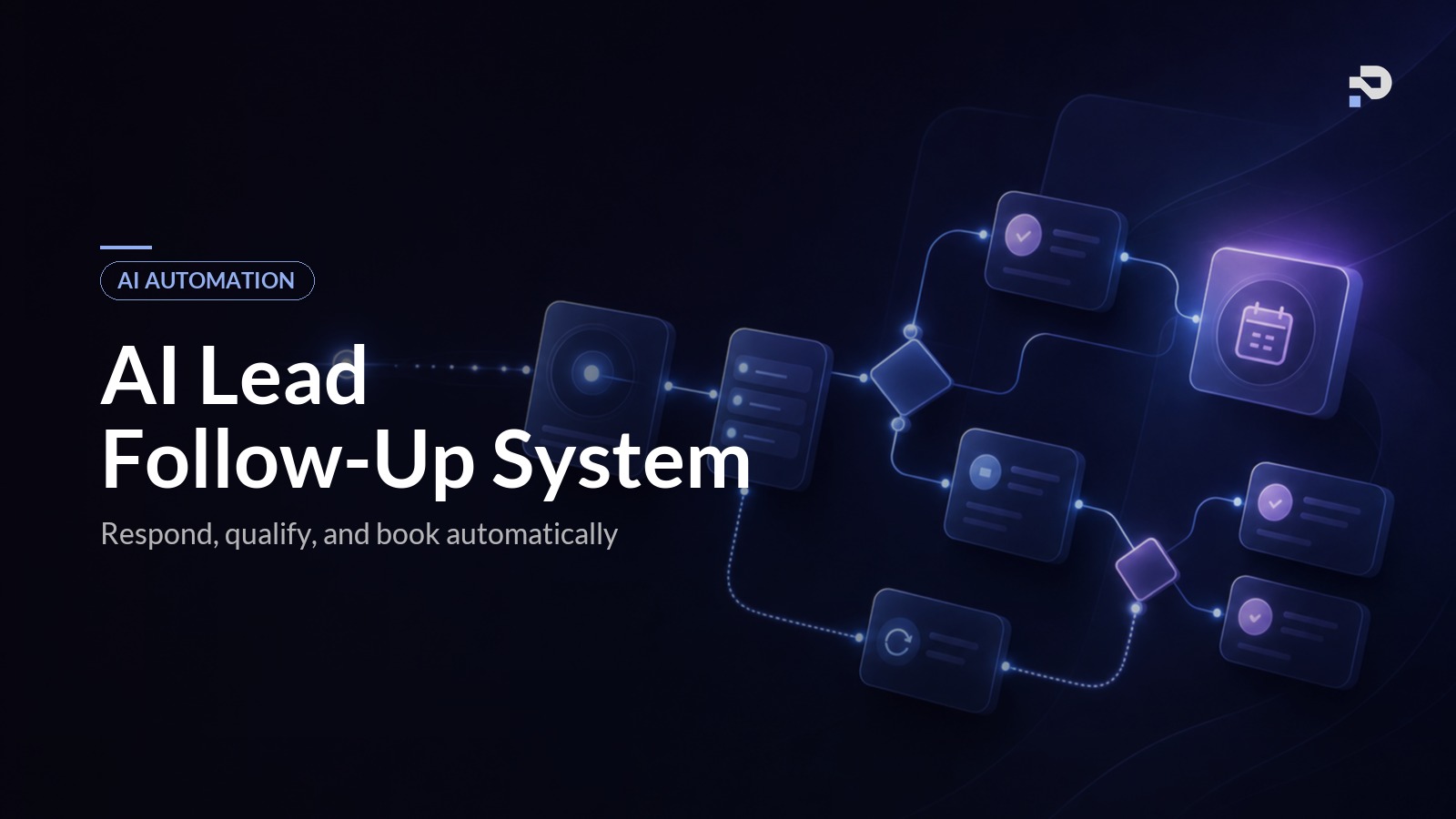
An AI lead follow-up system does one specific job: when a lead comes in (from a form submission, a DM, a referral message, anything), it responds within five minutes with a personalised, on-brand message that qualifies the lead and moves them toward booking a discovery call. The coach is never involved until there is a confirmed call on the calendar.
Coaches who build this system correctly report booking up to twice as many discovery calls from the same number of leads. Not from getting more traffic. From not losing the leads they already had.
The technical components are: a lead source monitor (whatever channel your enquiries come through), a qualification layer (usually a short AI-powered message sequence), and a calendar booking link presented at the right moment in that sequence. That is it. The complexity is in the logic, not the tooling.
2. Discovery call booking automation
Getting a lead to say "yes, I want to talk" is only half the job. Turning that intent into a confirmed call on your calendar, with the right time, the right context, and a low no-show rate, is where most coaches still lose a surprising amount of revenue.
A discovery call automation system handles the entire booking chain: sends the booking link at the right moment, confirms the appointment, sends reminders at the right intervals, sends pre-call preparation materials so the prospect arrives ready, and handles reschedules without you getting involved.
The pre-call materials deserve specific attention. When a prospect arrives at a discovery call having already read your positioning, having answered a short intake questionnaire, and knowing how the call will run, your close rate goes up and your call time goes down. That is not marketing opinion; it is basic sales psychology applied consistently.
No-show reduction is the other lever. One well-timed reminder the day before and another an hour before will cut your no-show rate significantly. This is a ten-minute setup that pays for itself on the first month.
3. Client onboarding automation
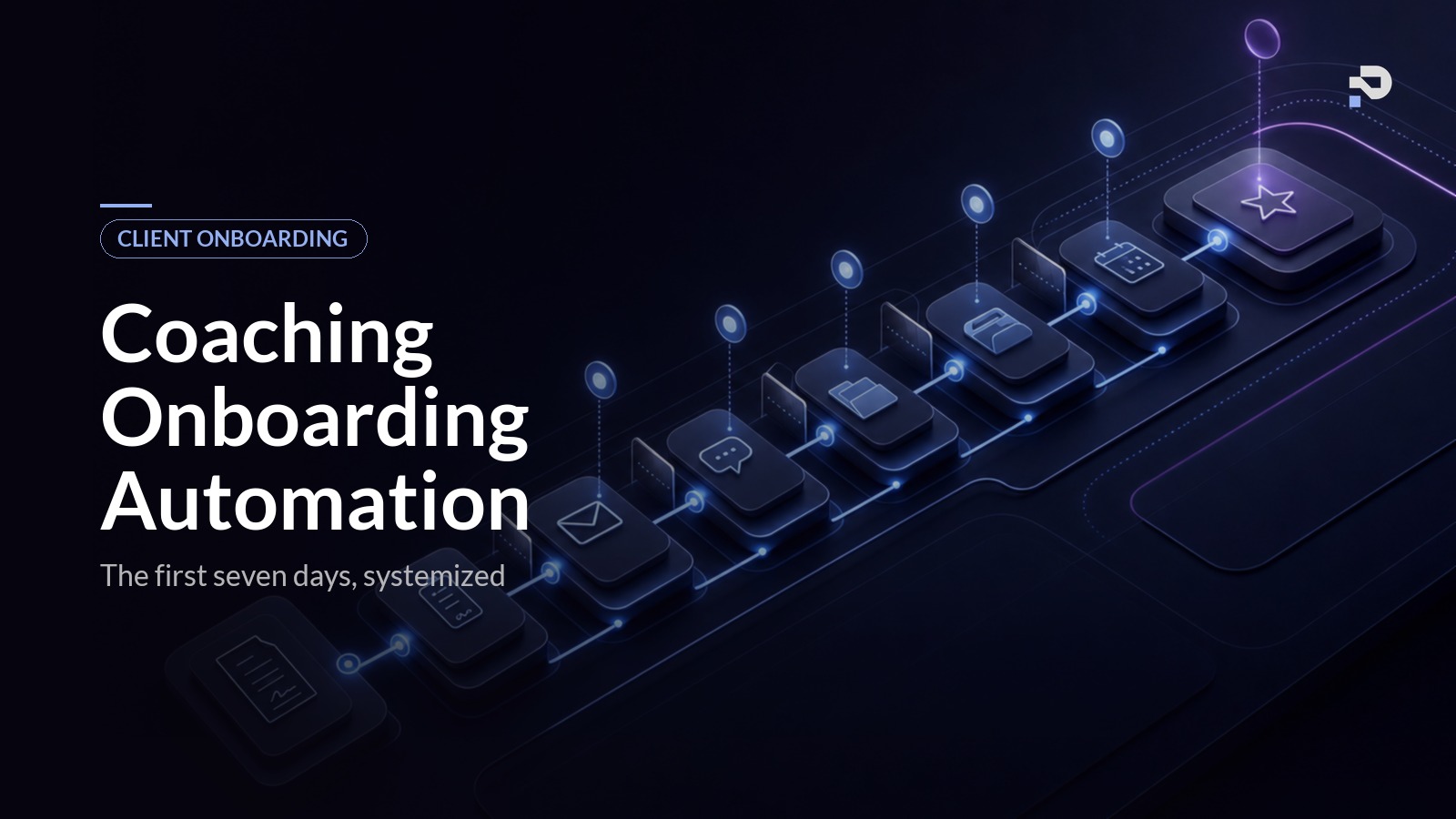
You have just signed a new client. Excellent. Now you need to send them a contract, collect a signed copy, send an invoice or payment confirmation, send an intake form, give them access to whatever client portal or community you use, schedule their first session, send a welcome email, and probably follow up if they have not done any of these things within 48 hours.
If you are doing this manually, you are spending two to four hours per new client on work that could be done by a system in two minutes, triggered the moment payment clears.
A client onboarding automation system fires a complete sequence the moment a client signs or pays, depending on your setup. Every step is conditional: if they have not signed the intake form within 24 hours, they get a reminder. If they have not booked their first session within 48 hours, they get another. The coach sees a completed onboarding dashboard, not an inbox full of manual follow-ups to track.
The sequence we typically build for high-ticket coaching programmes looks like this:
- Day 0: Contract sent, payment confirmation, welcome email with programme overview
- Day 0 (triggered by contract signing): Intake form, portal access, first session booking link
- Day 1 (if intake not completed): Gentle reminder with context
- Day 2 (if first session not booked): Second reminder with an alternative booking link
- Day 3: Welcome confirmation once all steps are complete, plus a note about what to expect in their first session
That sequence runs automatically for every client, with zero manual input. The coach's job is to show up for the first session with the intake already read.
4. Client accountability automation
This is the automation that affects client outcomes most directly, and the one that is most under-used.
Most coaching clients lose momentum between sessions. The session is energising, they leave with commitments, and then real life takes over. When the next session arrives, neither the coach nor the client has clear visibility on what was done, what stalled, and what the actual priorities are right now.
A client accountability automation system does not replace the coaching relationship. It supports it. What it does:
- Sends a check-in three to five days after each session, asking specific progress questions tied to what the client committed to
- Collects the client's response and stores it in a format the coach can review before the next session
- If a client has not responded within a set window, sends a nudge (not a chase, just a nudge)
- Surfaces a summary of the client's progress for the coach before each call, so the session starts with full context
The client experience improves because they feel supported between sessions, not just during them. The coach experience improves because sessions are more focused and less time is spent in "so, what happened this week?" territory.
This is also the automation that affects client retention most directly. Clients who feel consistently supported do not churn after three months. Building this system is, in effect, building a retention engine.
5. Outreach and content automation
This one sits slightly outside the core conversion loop, but it is relevant for coaches who do podcast guesting, speaking, or content-driven lead generation.
Building a personalised outreach system that identifies relevant podcasts, drafts host-specific pitches referencing recent episodes, and manages the reply pipeline is not a small build, but the outcomes justify it. When we built this for a speaking coach, the system sent 2,400 outreach emails across multiple audience verticals and achieved a 15% reply rate, which is three times the industry average. The positive reply rate was 55.56%. That translated to a pipeline of between £500k and £800k in speaking opportunities from a single system.
That is not a typical result, and it depends entirely on the quality of the data, the pitch craft, and the coaching offer being strong enough that being on the right podcast matters. But the point stands: outreach automation at this level of personalisation is no longer something you hire a team for. It is something you build.
How these five systems fit together
This is the part that most guides skip, and it is where the real value is.
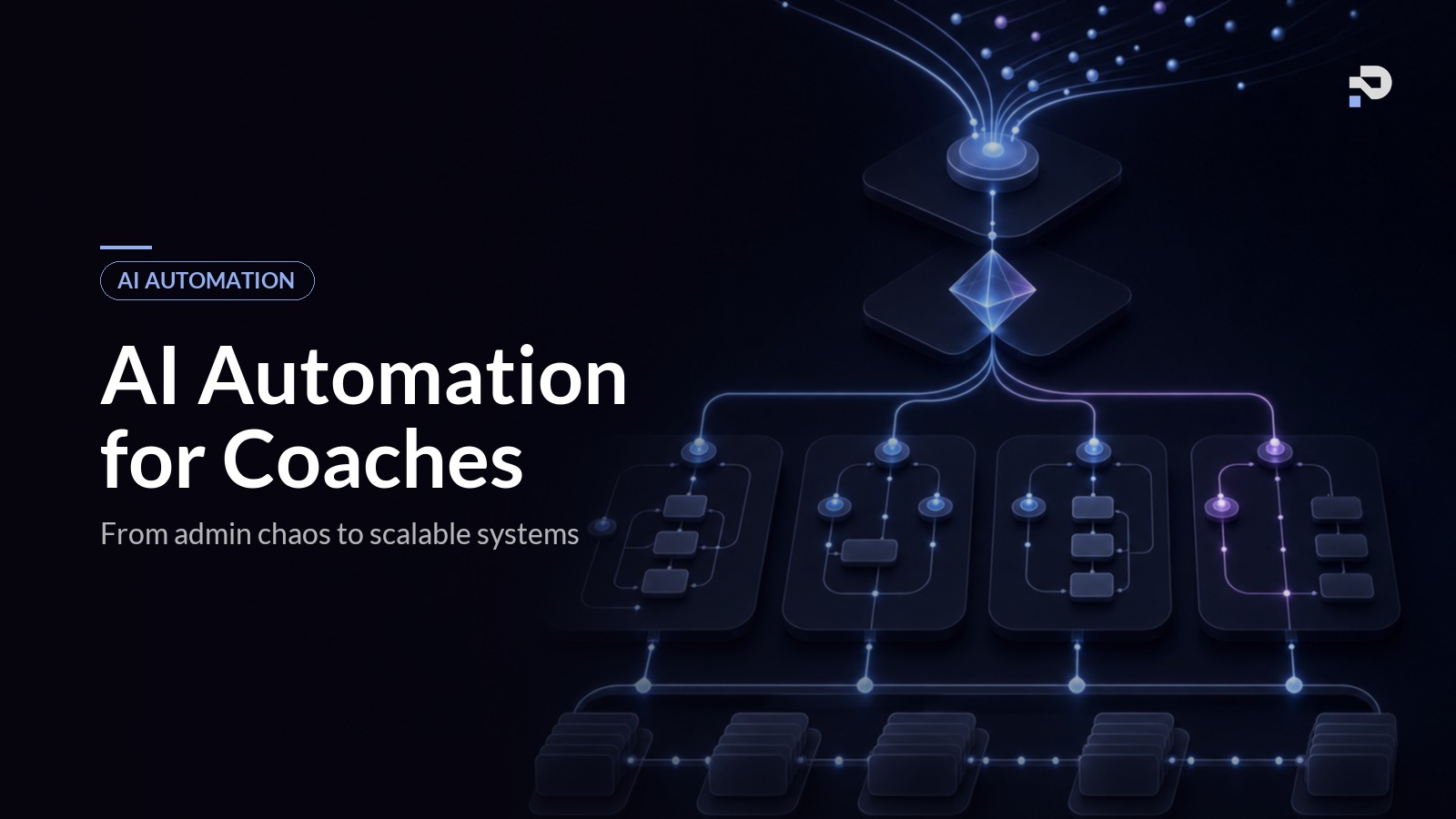
Each of these five systems is useful on its own. Together, they form a single pipeline that takes someone from first contact to paying client to retained client without the coach touching anything except the actual coaching.
The architecture looks like this:
- Lead comes in → follow-up system fires within five minutes, qualifies the prospect, sends booking link
- Prospect books → discovery call system confirms, sends pre-call materials, manages reminders
- Call happens, prospect says yes → onboarding system fires the moment payment clears, runs the full sequence
- Client is onboarded → accountability system begins, running between every session for the life of the programme
- Client completes programme → completion system sends programme wrap-up, request for testimonial, referral prompt (optional sixth system)
Every one of these handoffs is automatic. The coach's attention is on the coaching. Everything else runs without them.
What to build first
The order above is also the priority order, but not for every coaching business. Here is how to think about it:
Start with lead follow-up if your current leads-to-calls conversion rate is under 40%, or you are regularly losing leads to slower response times. This has the fastest return on investment of any automation, usually within two to four weeks.
Start with onboarding automation if you have steady client flow but you are spending significant time on manual onboarding admin. The ROI is less visible (it is time saved rather than revenue added), but the quality of life improvement is immediate.
Start with accountability automation if you have good conversion but clients are churning after three to six months, or clients are coming to sessions underprepared. This affects retention, which is where most coaching business growth actually comes from.
If you are at the early stage of your coaching business (fewer than five active clients), the honest answer is that you do not need automation yet. You need clients. Get to consistent client flow first, then automate the processes that have become predictable enough to hand to a system.
The mistakes worth avoiding
After building these systems across multiple coaching businesses, a few failure modes come up consistently.
Building before the process is stable
Automation makes your existing process faster and more consistent. If your onboarding process is messy and unclear, an automated version of it is a faster, more consistent mess. Define the manual process properly before you automate it.
Over-automating the relationship
High-ticket coaching depends on the client feeling known. A fully automated sequence that never sounds like the coach is a liability, not an asset. Every touchpoint should sound like you, which means the messages need to be written in your voice, reviewed carefully, and the system should include clear handoff points where the human coach is explicitly present.
Choosing tools before defining the logic
The tools are the least interesting part of this. n8n, Make, Zapier: these are plumbing. The interesting work is in the logic: what triggers what, what happens when a lead goes cold, what the branching conditions are. Define the logic first. Tools are chosen to implement the logic, not the other way around.
Not building in failure handling
Every automation fails eventually. A webhook goes down, an API rate limit is hit, a form submission arrives in an unexpected format. A production system handles these cases explicitly: logs errors, alerts the coach when something needs manual attention, and never silently drops a lead.
What this actually takes to build
The honest answer: this is not a weekend project, and it is not something you can fully assemble from drag-and-drop tools without understanding the underlying logic.
A complete AI Client Conversion System (lead follow-up, discovery call booking, onboarding, and accountability) typically takes two to four weeks to build properly, another week of testing and calibration, and then ongoing monitoring. The monitoring matters: these systems interact with real people, and the edge cases you did not anticipate will show up in the first month.
For coaches who want to build it themselves, that is entirely viable with time investment and comfort with logic-layer tooling. For coaches who want it built and handed over in a working state, that is what we do at Praxail.
Either way, the goal is the same: a coaching business where the systems do the repeatable work, and the coach does the coaching.
If you want to see how this works for a coaching business at your stage, get in touch. We can walk you through what a build looks like before you commit to anything.